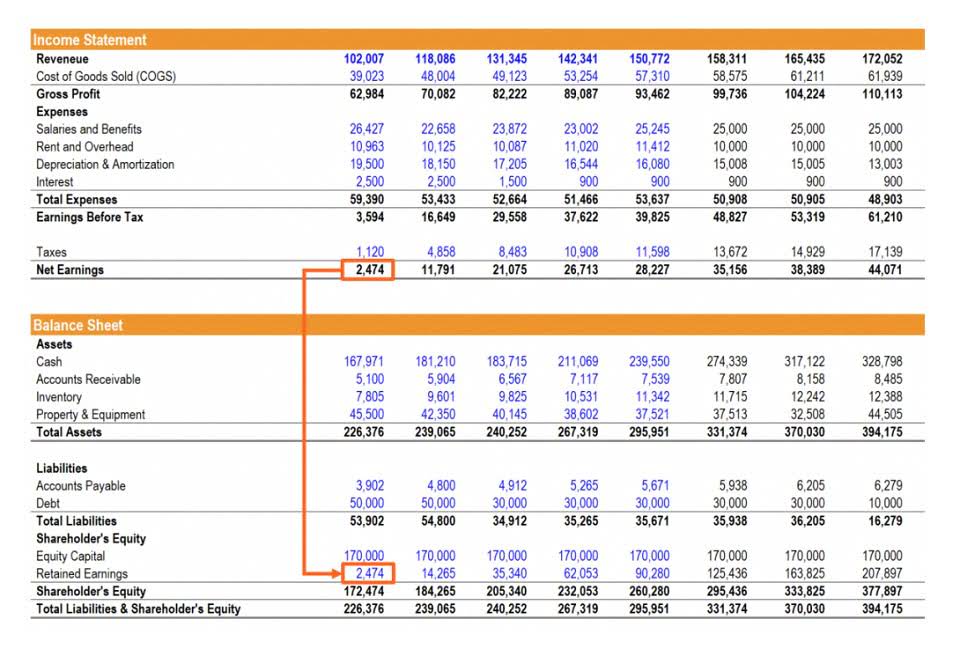
Different companies have different capital structures, resulting in different interest expenses. Hence, it is easier to compare the relative performance of companies by adding back interest and ignoring the impact of capital structure on the business. Note that interest payments are tax-deductible, meaning corporations can take advantage of this benefit in what is called a corporate tax shield. The most common method is to take the market cap (the total value of all outstanding shares) and add it to the debt (both short-term and long-term), then subtract any cash on hand. This calculation can be useful when comparing companies of different sizes or with different capital structures.
- Additionally, it excludes taxes, which can vary from one period to the next and are affected by numerous conditions that may not be directly related to a company's operating results.
- While EBITDA is a widely used metric for assessing a company's profitability, it's not the only one.
- Interest, depreciation, and amortisation expenses are operating expenses.
- For instance, the interest coverage ratio uses earnings before income and taxes, while the latter uses a more encompassing EBITDA.
- EBITDA is a measure of a company's earnings before interest, taxes, depreciation, and amortization expenses are deducted.
EBITDA Definition, Formula & Example – A Complete Guide
But with an effective budget, you can prepare for the dips by making the most of your peaks. The magic happens when our intuitive software and real, human support come together. Our team is ready to learn about your business and guide you to the right solution. NTM EBITDA must be built from projections rather than historical performance data.
The Importance of EBITDA Margin in Assessing Financial Health
If you’d like to learn more about the what, how and why of EBITDA and other key aspects of valuing and selling a business, you can join us at our complimentary executive conference. Both techniques should be utilized among the many used to determine business value. As such, EBITDA does not fall under Generally Accepted Accounting Principles (GAAP), which means companies can interpret the formula and its components in different ways. This flexibility can help them hide red flags that prospective buyers what is ebitda could later pick up during due diligence. In order to figure out whether your EBITDA number is ‘good’ or not, you’ll need to calculate your EBITDA margin. Therefore, we would recommend investing in a quality accounting system or working with trusted accountants to ensure your finances are up-to-date and precise.
BI Tools BI
While net earnings may incorporate net wages or losses, interest occasionally comprises cumulative interest. Startups and small businesses often use EBITDA to demonstrate profitability to potential investors. It provides a straightforward measure of the business’s earning potential, making it easier to attract venture capital or angel investors. Still, the term “cash flow” is used loosely in the industry, sometimes in reference to SDE or EBITDA, or the general profitability of a business. All calculations can be incredibly useful in the process of discovering the value of a business, which is why they are regularly applied by prospective buyers and investors to compare companies. For this reason, our experienced M&A professionals use EBITDA as a key part of our clients’ preparations for exiting https://usakdoganmuhendislik.com.tr/2021/02/01/audit-procedures-and-assertions-for-accounts/ their business, alongside many other tools and methods.
Example 2 – Calculating Operating Income from Gross Profit
- The said margin is said to indicate how much cash profit a firm can generate in a year.
- High levels of debt generate more interest expense and require more cash for principal and interest payments.
- InvestingPro offers detailed insights into companies’ EBITDA including sector benchmarks and competitor analysis.
- Moreover, EBITDA works well as a starting point for estimating cash flow availability for long-term debt payments.
- This aspect makes the EBITDA very helpful for comparisons between firms in an industry because it reflects only upon the abilities of the firms to make earnings out of business operations.
- Please note that it is not recognized by the Generally Accepted Accounting Principles (GAAP).
When a https://www.bookstime.com/articles/ai-invoice-processing private equity firm evaluates a potential acquisition, it often relies heavily on EBITDA to assess the target company’s operational profitability. EBITDA serves as a proxy for operating cash flow, reflecting the core earning power of a business without the distortions caused by capital structure or accounting decisions. This is particularly important for businesses with high capital expenditures, where depreciation and amortization can significantly reduce net income without affecting actual cash flow.